The National Human Rights Council (CNDH) continues to monitor with serious concern the mass movements and crossings recorded in the areas of Fnideq–Sebta and Beni Ansar–Melilla, and their consequences for the exercise and enjoyment of human rights. The events raise significant concerns relating, inter alia, to the right to life and physical integrity, migration-related rights, 33from cruel, inhuman or degrading treatment, non-discrimination and respect for human dignity.
The Council extends its condolences to the families of those who lost their lives and calls for the establishment of a joint and accountable body to verify the number and identities of those who died, ensure appropriate identification procedures, and facilitate the return of remains to their families for burial in conditions that respect human dignity.
These findings are preliminary and are based on field monitoring, digital monitoring, testimony gathering, and information cross-checked from several sources. The CNDH indicates that its inquiries remain ongoing and may lead to a more detailed report.
I. Monitoring Methodology
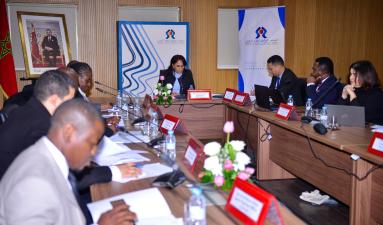
On 29 July 2026, the President of the CNDH established a monitoring and follow-up mechanism involving the Regional Human Rights Commissions of the Oriental, Tangier-Tetouan-Al Hoceima and Casablanca-Settat regions, together with the Council’s protection and digital communication directorates.
Monitoring teams were deployed to cities where people had gathered or from which collective crossing attempts were most frequently reported, including Beni Ansar and areas surrounding Sebta.
The Council also monitored content circulating on X, Instagram, TikTok and Facebook. It reviewed 23 groups with a combined membership exceeding 1.086 million users, generating more than 1,400 posts per day on average. Five major groups were reportedly closed on 30 July 2026.
II. Overview of Events
The CNDH recorded a gradual increase in attempted crossings from mid-June, with a significant escalation from 14 July 2026 and a peak on 30–31 July 2026.
A key factor identified by the Council was the circulation of misleading interpretations of Spanish Supreme Court Decision No. 814/2026 of 8 July 2026. The decision reportedly concerned the legal procedures applicable when migrants are intercepted at sea. Social media content inaccurately presented the ruling as meaning that persons reaching Sebta or Melilla by swimming could not be returned.
This false interpretation spread rapidly through large online groups and was accompanied by practical information concerning routes, meeting points, swimming preparation and coordination for collective crossings.
During the nights of July 29 and 30, information suggesting that 'the border was open' circulated widely. Large numbers of young people, minors and families subsequently travelled towards Fnideq. Individuals interviewed by the CNDH said they had received messages telling them to gather near crossing points after midnight in order to attempt entry into Sebta collectively.
On 30 July, thousands of Moroccan nationals and foreign nationals, including children, adolescents and women, reportedly crossed or attempted to cross into Sebta and Melilla. Efforts by the authorities to prevent crossings were accompanied by violent confrontations. The Council documented injuries, stone-throwing and property damage, as well as video footage indicating incidents of violence against individuals in the crossing and return areas.
On 31 July, the CNDH observed voluntary returns from Sebta. Monitoring teams reported seeing young returnees with visible injuries and bruising, some of whom had difficulty walking because of alleged assaults, exhaustion and physical strain.
III. Preliminary Findings
Deaths and injuries
• According to data available to CNDH, as of 6 August 2026, Moroccan sources reported 14 deaths on the Moroccan side, including those of Moroccan nationals, two foreigners. Separately, the Sebta authorities announced that more than 80 deaths
• A total of 136 injuries were recorded among civilians, and 13 injured were referred to hospital facilities. Four injured remain under medical treatment.
• According to the available data, medical assistance was provided to 87 members of the public security forces. The Spanish authorities reported no cases of injury among their personnel.
Arrests and prosecutions
• A total of 100 persons were arrested including 11 minors.
• Among those arrested, 69 are being prosecuted, including 14 who were released pending trial.
• Six cases were discontinued for lack of a criminal offence.
• Among the 11 minors arrested, six were placed in child protection centers, while five were handed over to their legal guardians.
Online misinformation, mobilisation and facilitation
• Attempts to cross into Sebta and Melilla intensified following the publication of the Spanish Supreme Court decision, accompanied by unprecedented mobilization on social media. All persons interviewed by the Council reported receiving information about the crossings by telephone or through social media content, which they subsequently shared within their personal networks.
• Digital groups played a central role in facilitating and coordinating the crossings, including through the sale of swimming equipment; the exchange of practical guidance on preparations, routes, meeting points and collective travel; the sharing of real-time information; and instructions on reaching Tangier and subsequently Sebta. Coordination continued through WhatsApp and Telegram groups, including through the circulation of invitation links.
• The CNDH identified posts indicating possible activity by intermediaries or networks that may be linked to human trafficking, including offers of “services” to organize or facilitate crossings, as well as information on surveillance points, routes, optimal crossing times, previous crossing experiences and reported successful arrivals in Sebta.
• The CNDH also recorded the presence of foreign accounts within Moroccan groups disseminating false information and content encouraging or facilitating crossings. One group subsequently deleted all telephone numbers bearing the international country code of a foreign State, while another group reviewed by the Council included more than 18 telephone numbers associated with the same State.
IV. Preliminary Conclusions
The CNDH recorded a number of incidents and practices that raise serious concerns regarding respect and protection of human rights, including:
• The dissemination of false and misleading information through social media and messaging platforms, particularly following the publication of the Spanish Supreme Court decision, which was misrepresented online as facilitating or authorising crossing attempts. Such content contributed to mobilisation by encouraging crossings, providing operational guidance and amplifying reports of successful arrivals in Sebta. The Council also identified indications of foreign accounts and possible organised networks involved in disseminating or facilitating such content, consistent with concerns already raised in its 2024 Annual Report regarding online networks offering unlawful crossing-related “services” for payment.
• The Moroccan authorities-imposed restrictions on the movement of persons heading toward the north of the country.
• Incidents affecting the physical integrity of persons attempting to cross, involving conduct attributed to Spanish and Moroccan authorities. The Tangier-Tetouan-Hoceima Regional Commission heard the testimony of an individual whose case has been widely circulated on social media and appeared to show a member of the public security forces threatening his physical integrity. The CNDH will forward the hearing record to the Public Prosecutor's Office for appropriate legal action. It should be noted that, according to the Council's findings and the testimony of the person concerned, an image of the incident was altered using artificial intelligence. The incident was also accompanied by disinformation, including the circulation of a photograph falsely presented as showing injuries sustained by the individual, although it was unrelated to the incident.
• Attacks by extremist groups against young people and minors who had crossed into Sebta, including pursuing them and subjecting them to various forms of abuse, insults, beatings and stigmatization. The field-monitoring team collected testimonies from returnees and observed signs of beatings and various scars on the bodies of young people. It also noted multiple and consistent allegations of ill-treatment and physical assaults committed by Spanish security forces 'when there are no cameras,' according to their statements.
• The decision by the local authorities in Sebta not to provide the necessary assistance and to order the closure of restaurants, cafés and stores, resulting in persons being prevented from purchasing food and water and subjected to starvation and dehydration. Those affected included children, women and persons in situations of vulnerability, some of whom required medical assistance as a result. According to consistent testimonies, security personnel intervened to remove young people from restaurants that had decided to provide assistance.
• Non-compliance with the legal standards and safeguards applicable to return or removal procedures, including those relating to access to asylum procedures for foreign nationals.
• Failure to provide adequate assistance and protection to persons from racist and xenophobic assaults and attacks to which they were subjected within the territory of Sebta.
• Growing incitement to hatred and racism against foreign nationals. In this regard, the CNDH warns of the consequences of the political exploitation of the mass crossings, several instances of which have already been recorded.
Based on the testimonies collected, the Council considers that collective attempts to cross towards the enclaves of Sebta and Melilla cannot be understood solely through traditional explanations linking migration to poverty. These attempts require a deeper understanding, insofar as they also reflect individual dynamics as well as evolving 'aspirations' and mobility expectations, shaped in part by a growing digital environment that redefines the current perception of borders and barriers.


Read more