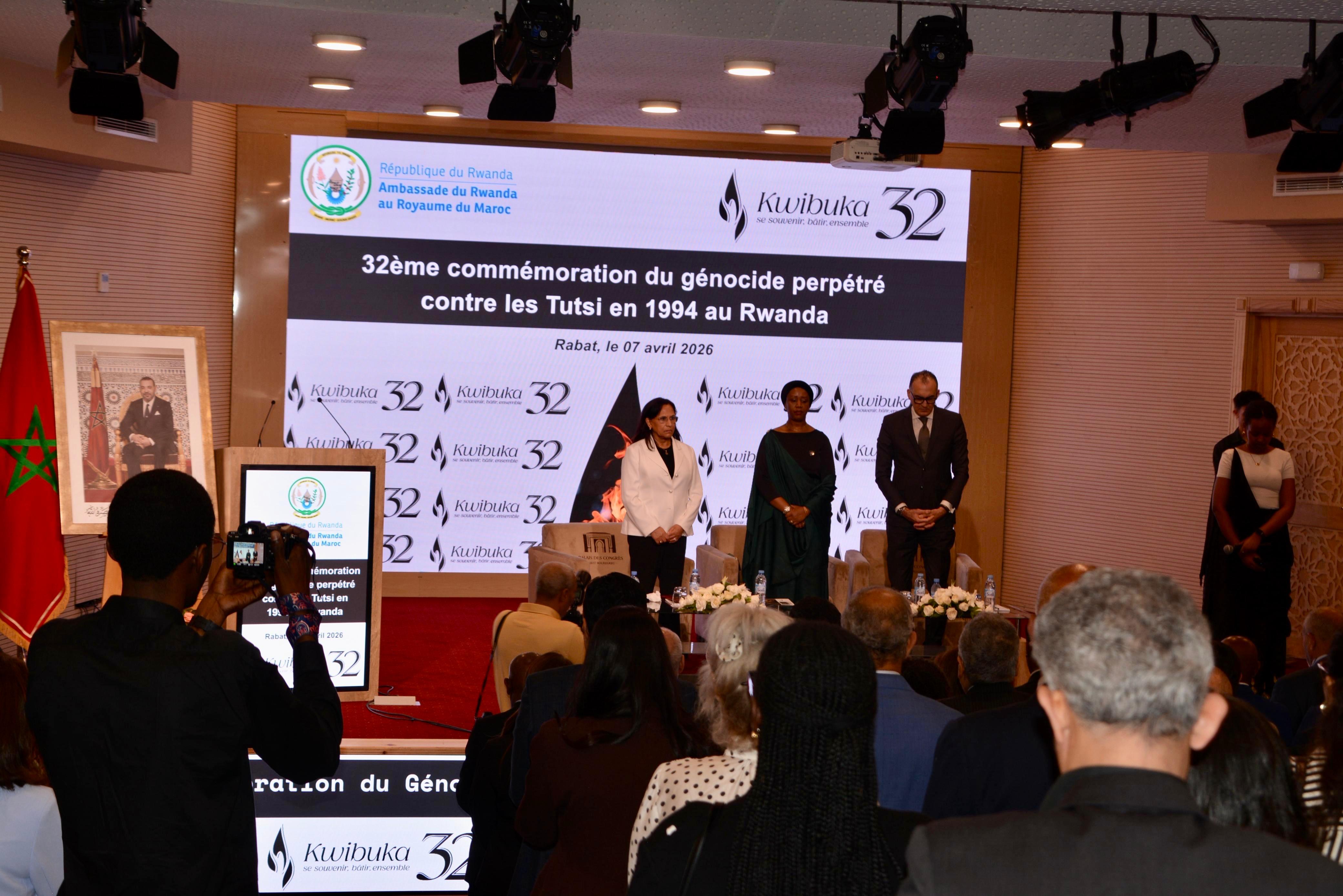
“Memory is not just a recollection of the past, but a commitment and a shared responsibility to ensure it is never repeated.” With these words, Ms. Amina Bouayach, Chairperson of the National Human Rights Council (CNDH), opened her address this morning in on the occasion of the 32nd commemoration of the genocide against the Tutsi, held at the invitation of the Embassy of Rwanda in Rabat.
She described memory as a cornerstone of prevention, one that fosters collective vigilance, strengthens early warning, and reinforces protection, especially in a global context where the same dynamics that have led to major human tragedies continue to reappear in different regions. She pointed to exclusion, hatred, stigmatization, the erosion of dignity, dehumanization, and serious human rights violations as persistent warning signs, stressing that these trends have not disappeared and continue to pose a real risk of recurrence.
Ms. Bouayach called for memory to be turned into a forward-looking and practical force, capable of anticipating risks, identifying them early, and addressing them before it is too late. In this sense, she noted that the genocide in Rwanda is not only a tragedy of the past, but also an enduring warning and a reminder that such atrocities often develop gradually and take root before they fully unfold.
She further emphasized that preventing mass atrocities requires tackling their root causes, particularly by recognizing early indicators such as the normalization of hate speech, the spread of discrimination, and the erosion of fundamental rights. Ignoring injustice, she warned, only deepens crises, while overlooking warning signs can lead to situations that are difficult, if not impossible, to reverse.
In this spirit, she called for stronger vigilance mechanisms grounded in a clear understanding of the factors that weaken societies, along with sustained efforts to monitor violations and reject any form of normalization. Such violations, she stressed, do not simply fade away, but evolve and intensify over time.
Ms. Bouayach concluded her remarks by affirming that memory is a way of protecting the future and helping to guard against the recurrence of such tragedies.


Read more