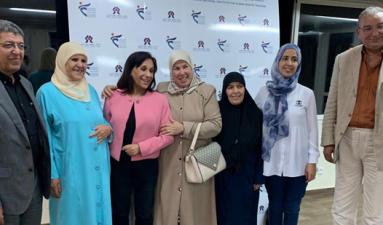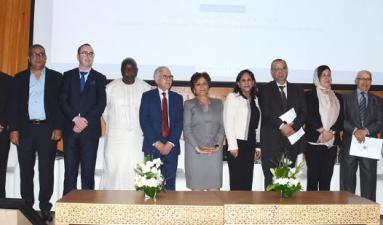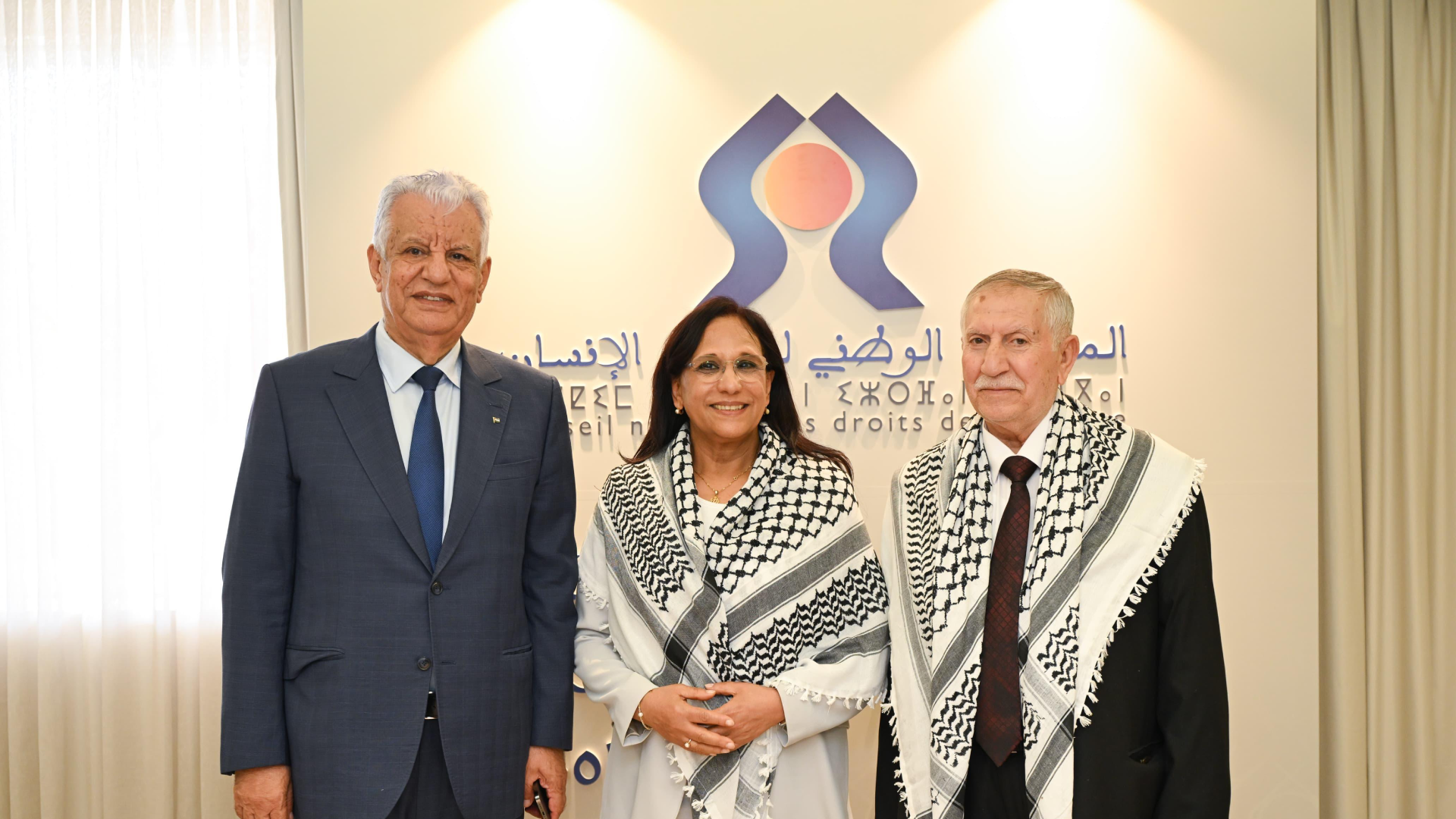
The National Human Rights Council (CNDH) received a high-level delegation from the Palestine Liberation Organization (PLO) composed of senior political and human rights representatives, notably the head and members of the PLO’s Department of Human Rights and Civil Society.
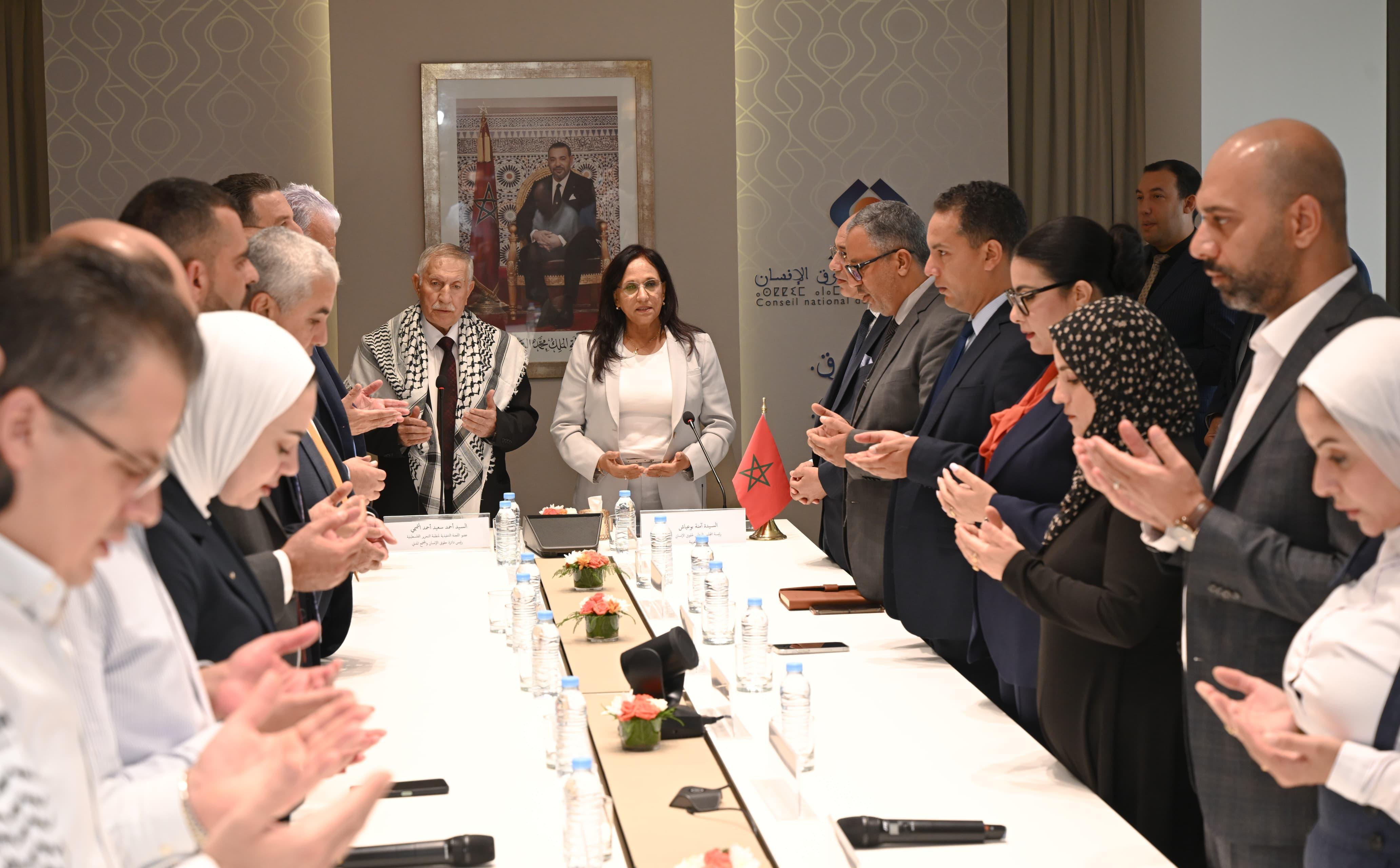
The training program was officially inaugurated in the presence of officials and representatives of Moroccan national institutions by Ms. Amina Bouayach, CNDH Chairperson, alongside Mr. Ahmad Said Al Tamimi, Head of the Department of Human Rights and Civil Society and member of the PLO Executive Committee. Scheduled to run from July 14 to July 20 in Rabat, the program aims to enhance participants’ expertise in international humanitarian law, human rights documentation, and international advocacy.
The training marks the first formal engagement between CNDH and the PLO’s Department of Human Rights and Civil Society, an entity that bridges both civil and political dimensions. This interaction carries particular significance, as Ms. Bouayach emphasized that the Palestinian cause “has been at the heart of political and geopolitical debates for decades.” She underscored that adopting a human rights–based approach enables the issue to transcend the confines of regional conflict and occupation, reframing it instead as “a struggle for dignity, equality, and justice.”
In her opening remarks, Ms. Amina Bouayach affirmed that “Palestine is an open wound in the human conscience.” She stressed the unwavering solidarity of the Moroccan people, who continue to grieve the scenes of killing, siege, starvation, displacement, bombardment, deprivation, and the grave violations inflicted upon the Palestinian population.
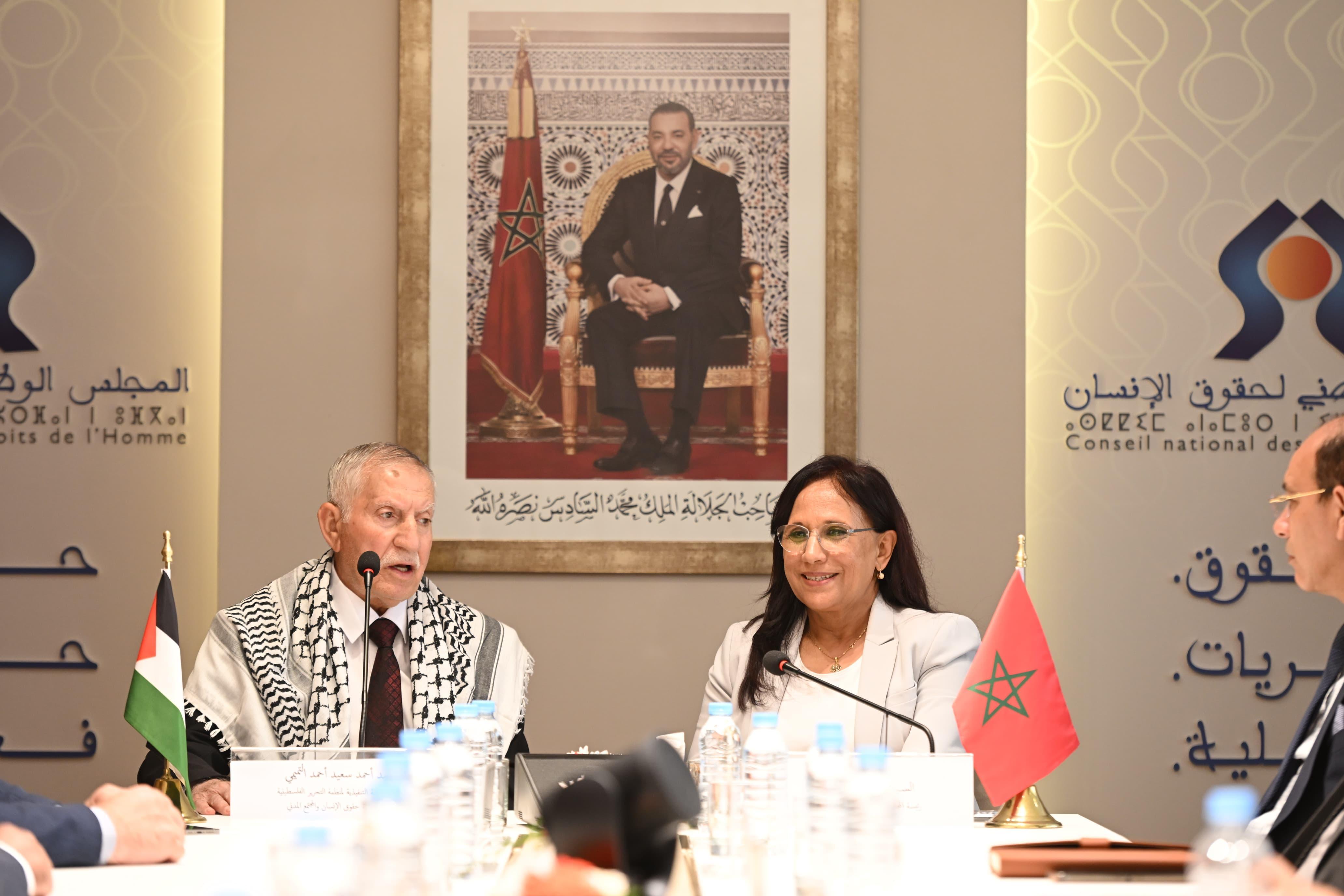
She noted that holding this training program “in the House of Human Rights in Morocco, your house, and at this particular moment is not merely an opportunity to exchange experiences and expertise, but a sincere expression and renewal of an enduring human rights position rooted in solidarity.” This initiative, she explained, conveys a clear message reflecting the firm and principled stance of Morocco, shared by both the King and the people, and forms part of the Kingdom’s sustained efforts, including those led from Rabat through the Bayt Mal Al Qods Acharif Agency, to urge the international community to fulfill its legal and moral responsibilities.
“Palestine is fundamentally a human rights issue,” Ms. Bouayach stated. “It is a true test of the universality of human rights, a test of the world’s conscience, and a mirror reflecting the credibility of international commitments and the collective ability to uphold humanitarian and human rights principles.”
For his part, Mr. Al Tamimi commended Morocco’s unwavering defense of the Palestinian cause, highlighting the principled positions consistently upheld by both the King and the Moroccan people, and the special place Palestine occupies in their hearts. He also praised Morocco’s continued support, particularly that of the CNDH and its Chairperson, Ms. Amina Bouayach within international human rights forums.
“We firmly believe in the importance of this partnership,” Mr. Al Tamimi stated, noting its role in “amplifying the voice of Palestine” on the global stage. He reaffirmed the PLO’s commitment to sustaining this cooperation and expressed deep appreciation for the Council’s responsiveness to initiatives aimed at strengthening the protection of Palestinian rights.
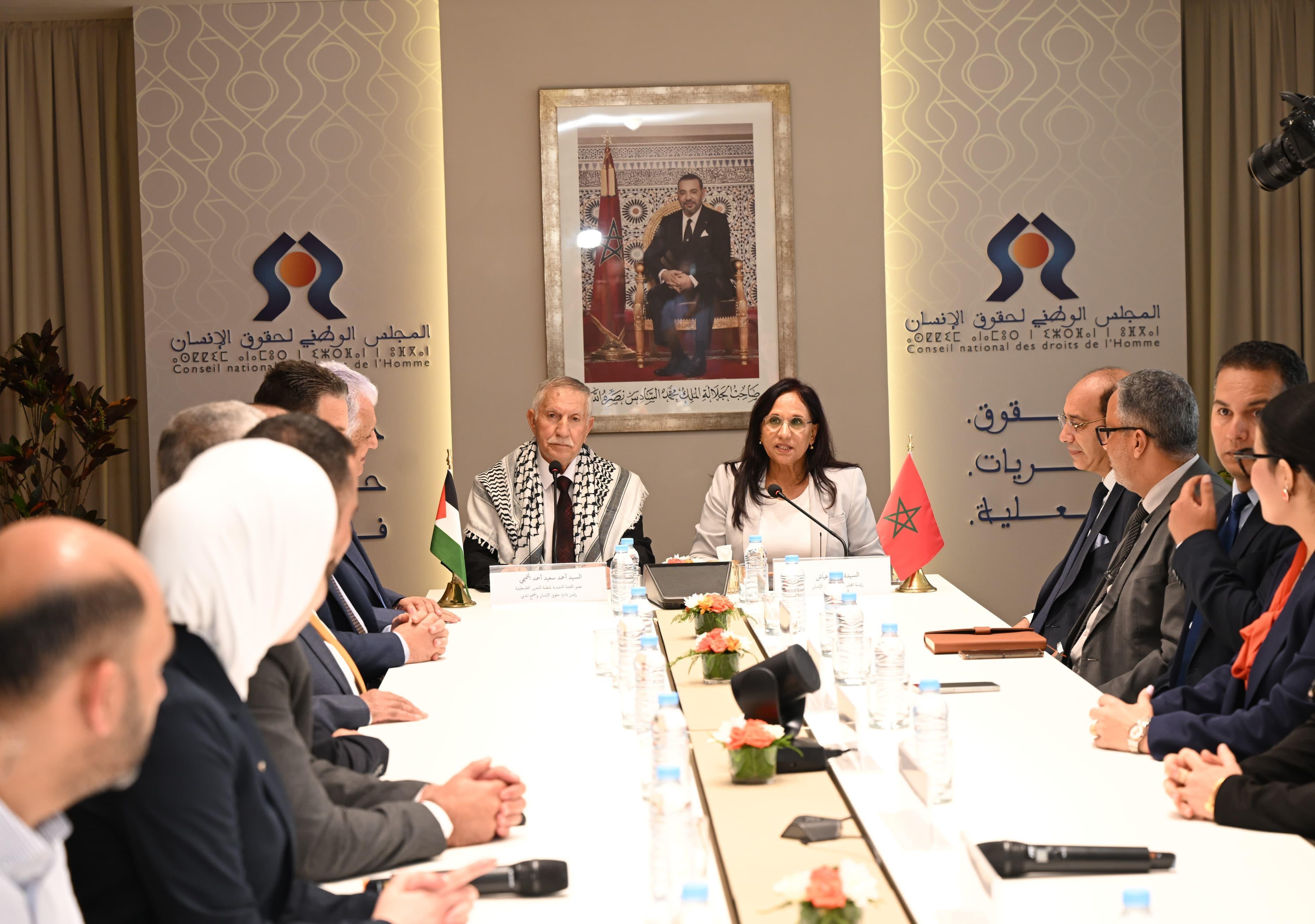
“We emphasize the depth of our relationship with the CNDH,” he added, “a relationship founded on mutual trust and productive cooperation.” He concluded by underscoring that the signing of a cooperation agreement with the Council represents a valuable opportunity to benefit from Morocco’s human rights experience and to establish lasting channels of communication with a leading institution in this field.
The training program, jointly organized by the CNDH and the Driss Benzekri Institute for Human Rights in Rabat, combines theoretical and practical workshops covering a wide range of topics, including:
International and UN mechanisms for the protection of human rights
Reporting, complaints procedures, investigations, and field documentation techniques
International human rights law and international humanitarian law
Documentation of violations in the occupied Palestinian territories
The International Criminal Court
International advocacy and engagement with global civil society
Morocco’s transitional justice experience
On this occasion, the Palestinian Ambassador to Rabat, Mr. Jamal Choubki, expressed appreciation for the Kingdom of Morocco’s support during this critical period, emphasizing that “our battle is purely legal.” He highlighted the urgent need to strengthen Palestinian expertise and to actively engage in defending the rights of a people facing genocide.
In her concluding remarks, Ms. Amina Bouayach reaffirmed that the CNDH will continue its advocacy within the UN system and other international mechanisms. She stressed that political action grounded in human rights has the power to transform the Palestinian cause from a geopolitical issue into a universal struggle for human dignity.
As a national human rights institution, she affirmed, the Council ensures that grave violations are consistently addressed in regional and international forums, calling for an immediate end to attacks and for the protection of civilians and human rights defenders, some of whom, including colleagues, have suffered the same fate as the broader Palestinian population. She also underscored the urgent necessity of facilitating the delivery of humanitarian aid, reaffirming the Council’s ongoing commitment in this regard.
Finally, the CNDH Chairperson announced that a cooperation protocol will be signed at the conclusion of the training session on Friday, July 18, between CNDH and the PLO’s Department of Human Rights and Civil Society. The agreement aims to strengthen the exchange of expertise, enhance capacity-building efforts, and establish structured mechanisms for cooperation and consultation in support of the protection and promotion of human rights.


Read more