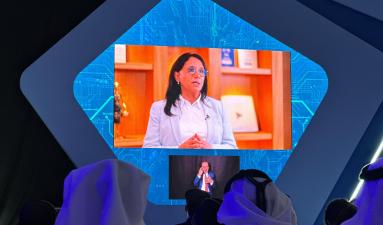
Speaking at an international conference on human rights in the digital age and artificial intelligence, held in Athens, Greece, on Wednesday, October 14, 2026, Ms. Amina Bouayach, Chairperson of the Global Alliance of National Human Rights Institutions (GANHRI), highlighted the risks that irresponsible and unethical uses of artificial intelligence and digital technologies pose to human rights, particularly privacy, equality and access to reliable information.
While technological advances offer opportunities to improve people’s lives and make services more accessible, Ms. Bouayach noted that they can also undermine freedoms and deepen existing forms of discrimination.
She drew attention to several challenges linked to the growing use of digital technologies, including disinformation that can distort public debate, deepfakes that make it increasingly difficult to distinguish authentic content from fabricated material, and biased algorithms that can perpetuate different forms of discrimination.
Ms. Bouayach also highlighted the risks associated with the misuse of facial recognition technology, stressing that human rights protections must extend beyond the outcomes of technological applications to cover every stage of digital systems, from design and development to deployment and use.
She further emphasized the need to protect the people working behind these technologies, including content moderators and data annotators involved in training and operating AI systems in different parts of the world. Their dignity and rights, she stressed, must also be respected.
Ms. Bouayach maintained that harnessing AI’s potential requires clear safeguards to prevent it from widening inequalities or undermining fundamental freedoms, alongside effective mechanisms to ensure accountability and provide remedies for people harmed by its use.
She also underscored the importance of conducting human rights impact assessments of AI systems and monitoring their effects throughout their lifecycle. Where serious risks cannot be adequately controlled, she stressed, their use must be reconsidered.
These concerns raise a fundamental question about the future relationship between people and technology: how can society embrace digital progress and foster innovation while ensuring that neither comes at the expense of privacy, equality or human dignity?


Read more