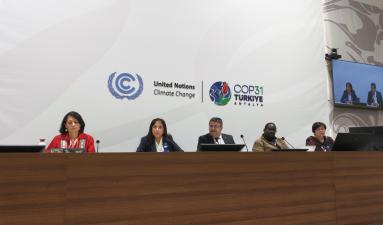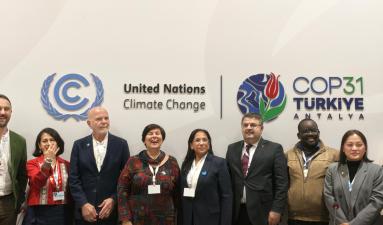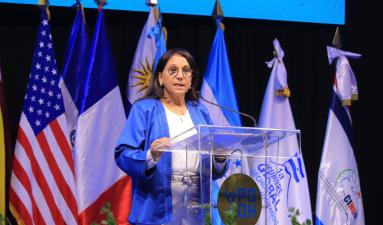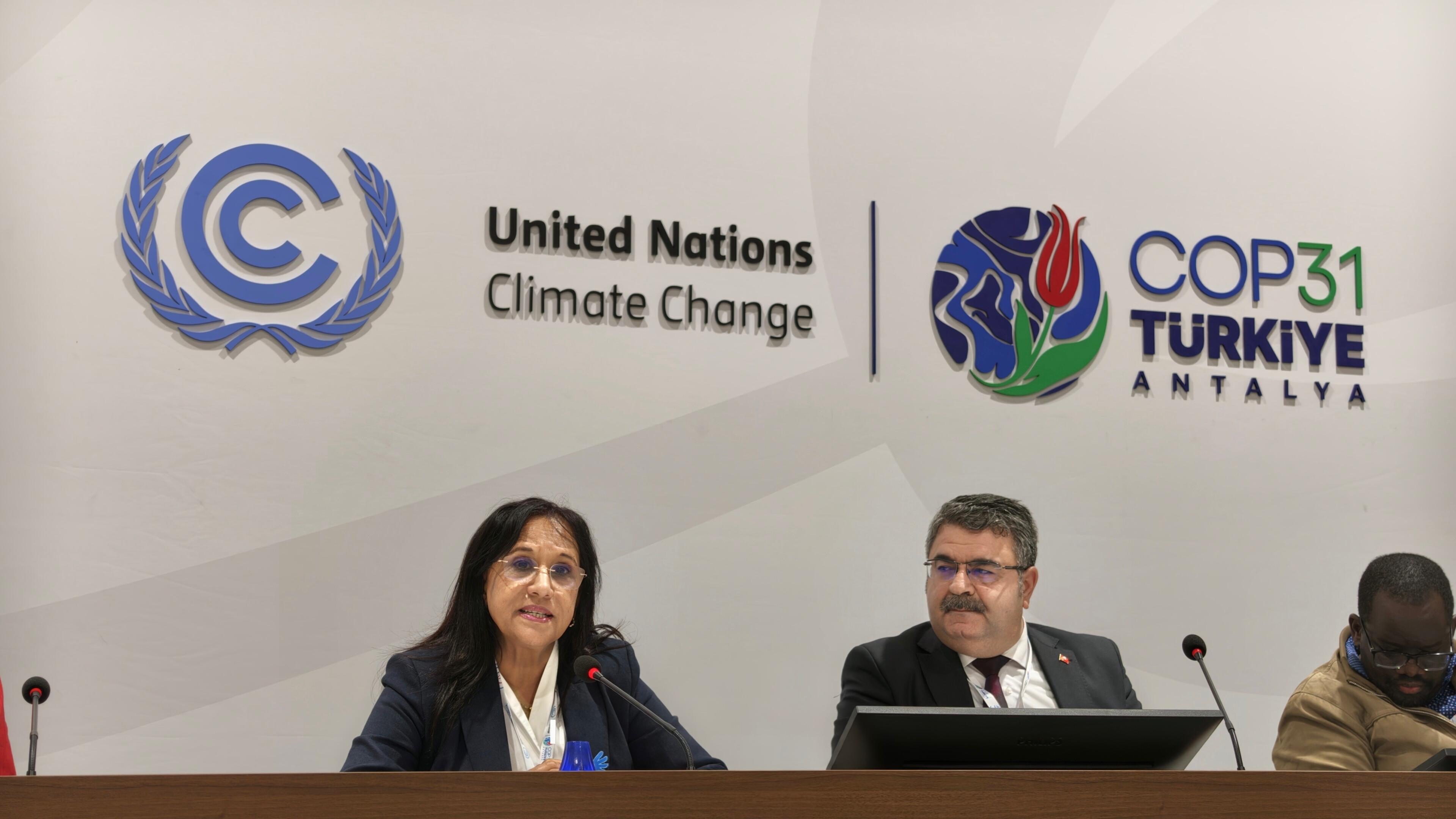
During her visit to Antalya, Türkiye, this week, Ms. Amina Bouayach, Chairperson of the Global Alliance of National Human Rights Institutions (GANHRI), has been advocating for greater representation and independent participation of national human rights institutions (NHRIs) in climate negotiations. She has raised the issue in several meetings with UN officials and representatives, as well as at an international meeting she chaired during the UN Climate Change Conference (COP31).
Ms. Bouayach called on the United Nations to establish a dedicated accreditation mechanism that would allow NHRIs to participate in the Conferences of the Parties in their own capacity, present the findings of their monitoring work and make recommendations on the impact of climate change on human rights.
She made the call during an international meeting held in Antalya on Tuesday, 10 November 2026, as part of COP31, which focused on advancing a human rights-based approach to climate action and the role of NHRIs.
Ms. Bouayach noted that GANHRI's observer status at climate conferences was an important and positive step, but did not provide sufficient opportunities for all its member institutions to participate. She stressed the need to enable NHRIs to attend in their own capacity and contribute directly to climate discussions and negotiations, drawing on their mandates to monitor human rights, assess public policies and make recommendations to the relevant authorities.
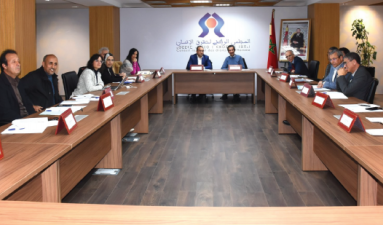
NHRIs attending COP31, including Morocco's National Human Rights Council (CNDH), are seeking to become more actively involved in the negotiation process to ensure that human rights are at the heart of climate negotiations and responses to climate change.
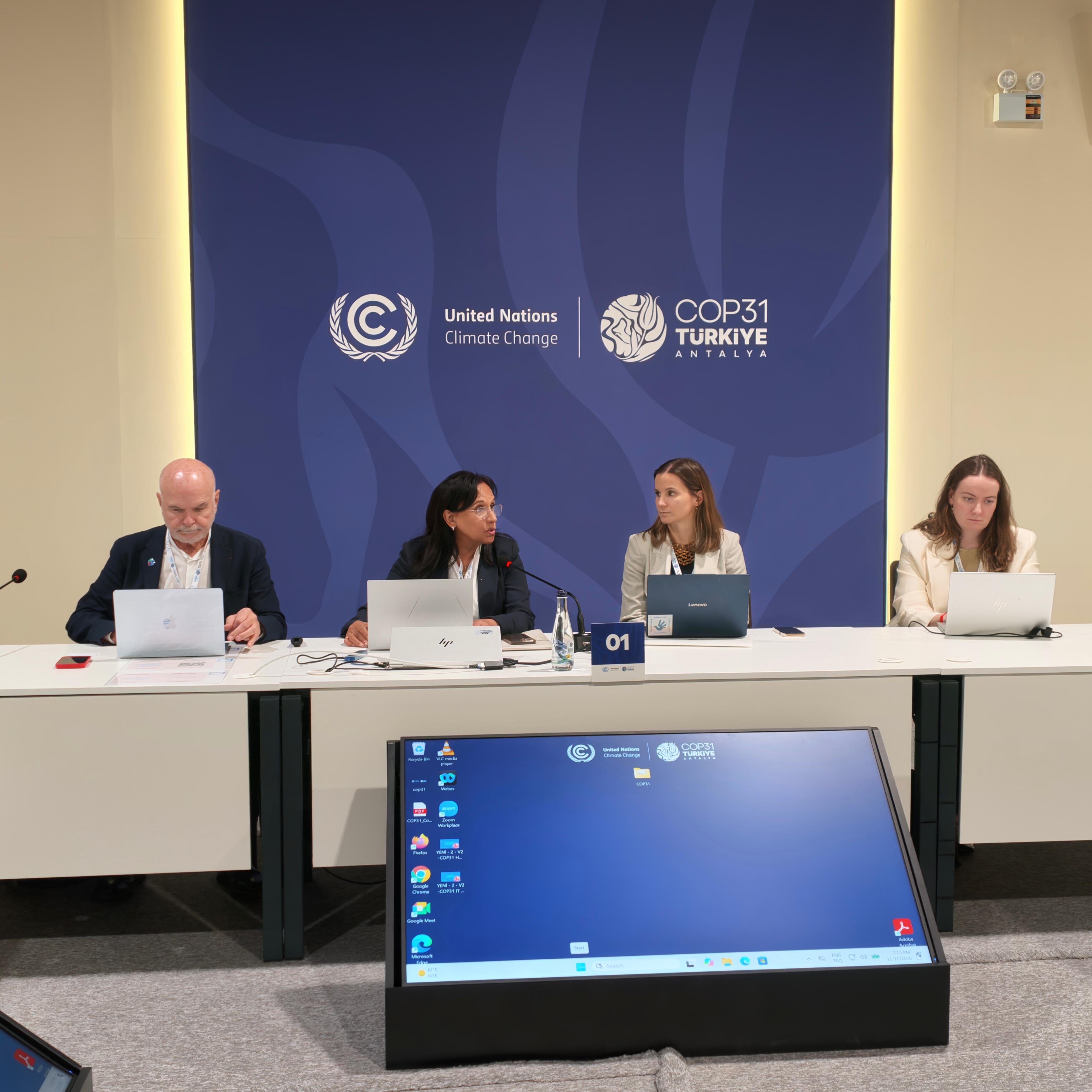
"We, as 119 NHRIs, share the ambition of strengthening the integration of a human rights-based approach into the development of climate commitments and monitoring their implementation," Ms. Bouayach stated.
She also emphasized that the role of NHRIs should go beyond participation in international conferences. They should also be involved in following up on the implementation of climate conference outcomes and commitments at the national level, helping develop indicators to measure progress from a human rights perspective, ensuring that affected communities have a say in climate-related decisions and policies, and monitoring whether the right to a healthy environment is protected and climate finance reaches the communities most vulnerable to climate change.
"We do not want NHRIs to simply attend climate conferences. We want them to play an active role in negotiations, contribute to shaping commitments and independently monitor their implementation. Our aim is to ensure that human rights are at the heart of climate decision-making, policies and commitments," noted the CNDH Chairperson.
On the occasion, Ms. Bouayach also outlined GANHRI's efforts to strengthen the capacity of NHRIs and coordinate their work on climate issues. These include the work of its Caucus on Human Rights and Climate Change, the development of a tool to monitor the right to a healthy and clean environment, and the preparation of guidance on climate legislation.


Read more