
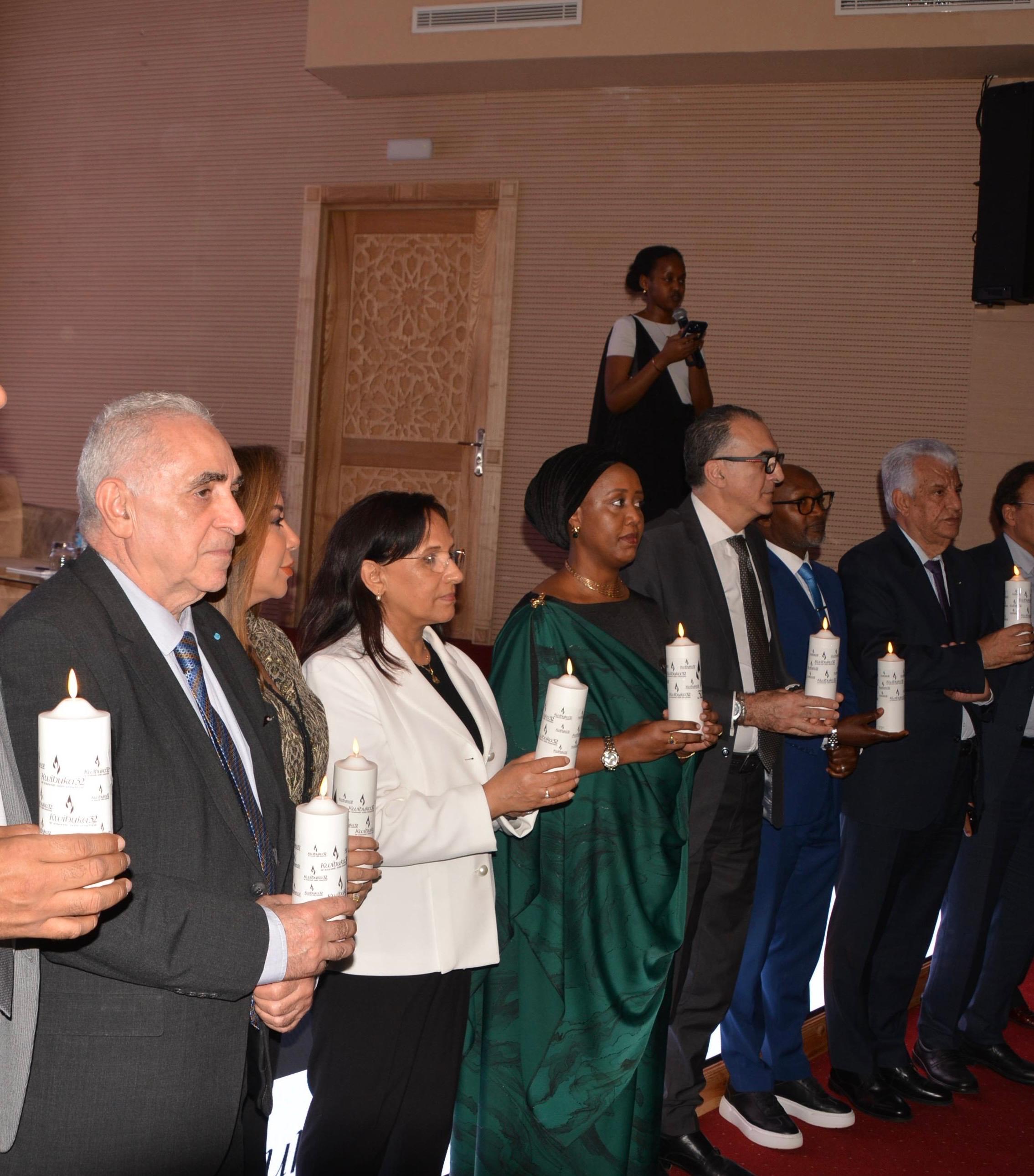
Ms. Amina Bouayach, Chairperson of the National Human Rights Council (CNDH), warned today in Salé, Morocco, of the growing risks posed by disinformation and the rapid spread of misleading content, particularly in environments that amplify such narratives quickly and across wide audiences.
Speaking on the occasion of the 32nd commemoration of the genocide against the Tutsi in Rwanda, she noted that this phenomenon increasingly fuels divisions, shapes public perception, and accelerates social polarization.
Ms. Bouayach emphasized that addressing these challenges, and their impact on human rights, requires fostering a culture that can distinguish between different forms of discourse. She stressed the importance of developing the ability to analyze, question, and verify information as essential tools to counter disinformation and confront hate speech, which thrives in digital spaces that allow for faster, broader, and low-cost dissemination.
In this context, she underlined that effective prevention begins with education, particularly education grounded in values and human rights. “We need learning systems that promote dignity, equality, and inclusion, while rejecting exclusion, discrimination, and indifference to build equitable and inclusive societies capable of resisting harmful dynamics,” she noted.
She further highlighted that investing in human rights and values-based education is a powerful way to strengthen societal resilience, not only against disinformation, but also against practices that undermine social cohesion and weaken trust in the public space.
In conclusion, Ms. Bouayach stressed that strengthening critical thinking, alongside promoting a culture of human rights, remains essential to building societies that can face today’s challenges and avoid paths that threaten stability and human dignity.


