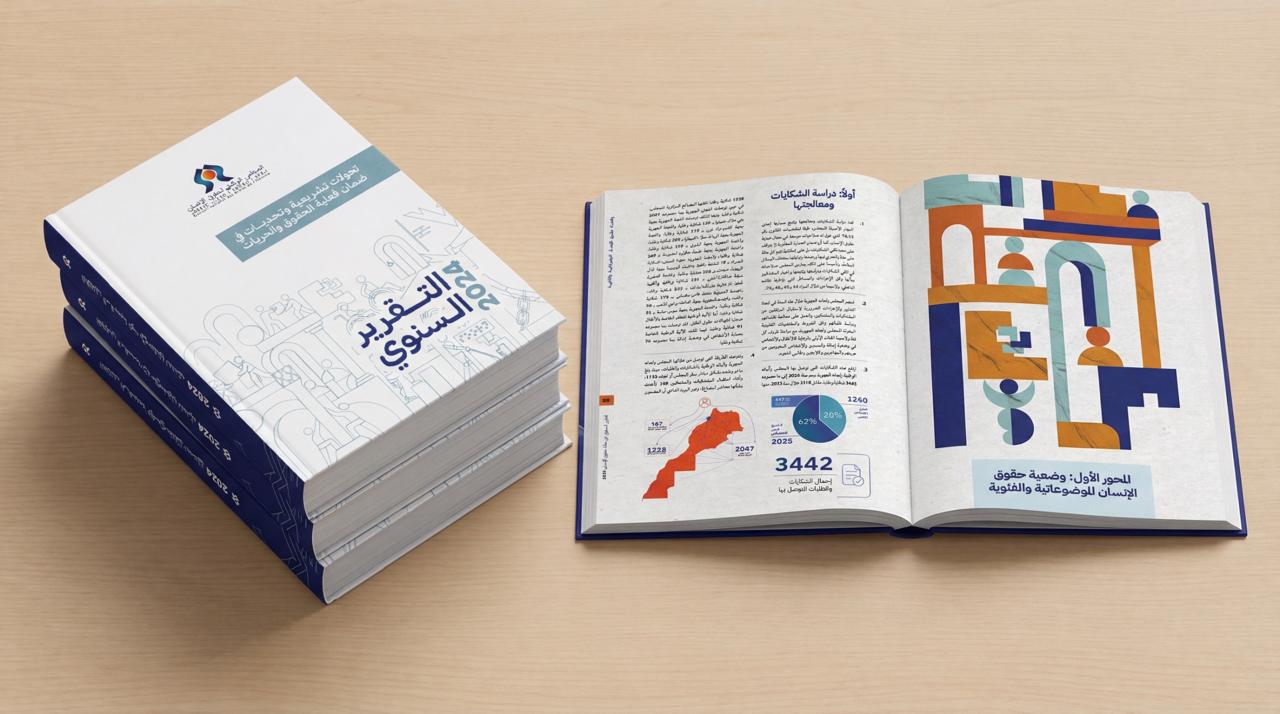
Among the key conclusions of the National Human Rights Council’s (CNDH) 2024 report, “Legislative Transformations and Challenges in Guaranteeing the Effectiveness of Rights and Freedoms,” the Social Protection Project stands out as one of the most significant social initiatives undertaken in Morocco in recent years. The report emphasizes its role as a fundamental lever for strengthening economic and social rights and consolidating the foundations of a robust welfare state.
The Council acknowledges notable progress in the project’s implementation, particularly in the increasing number of beneficiaries across various programs.
During 2024, this social reform initiative, launched in 2021, achieved significant milestones, following the completion of two key phases: the generalization of mandatory health insurance and the expansion of family allowances. The final phase, set for 2025, aims to extend pension schemes and generalize unemployment benefits.
The initiative is also in line with Morocco’s international human rights commitments. On the 75th anniversary of the Universal Declaration of Human Rights, Morocco pledged to the United Nations Secretariat to strengthen its national social protection system, reflecting its commitment to structural reform, aiming to guarantee the effective realization of the right to social protection while enabling assessment of progress and proactive responses to challenges amid global economic and social crises.
The report highlights that this commitment translates a determined effort to position social protection as a central mechanism for safeguarding dignity and reducing vulnerability.
The project’s scale is particularly significant. By July 2024, approximately 3.8 million families were receiving direct social support, while the administration had received around 4.6 million applications, covering nearly half of all Moroccan families. This demonstrates the growing role of social protection in supporting vulnerable groups and enhancing their resilience to economic and social fluctuations.
The CNDH's 2024 Human Rights Report also identifies several challenges in implementing the project. These include accurately targeting beneficiaries, ensuring inclusive access across social and regional disparities, maintaining financial sustainability, and preserving the real value of social support in the context of inflation and economic changes.
To be continued…
Human Rights 2024
Ensuring the Effectiveness of Rights and Freedoms
Legislative Transformations and Challenges


Read more