Marking International Women’s Day 2026, the National Human Rights Council (CNDH) launched a national and regional dynamic on Wednesday, March 11, 2026, aimed at promoting effective access to justice and equality for all women and girls and encouraging reporting on violence.
This dynamic builds on the Council’s longstanding efforts and awareness-raising initiatives aimed at combating violence and discrimination, while strengthening the protection, empowerment, and access to justice of women and girls. It also draws on the outcomes of several initiatives carried out in recent years, including the “Speak Out against Gender-Based Violence” campaign, which seeks to encourage reporting and break the silence surrounding violence against women and girls. The campaign also builds on the national caravan organized at the end of 2025, which toured Morocco’s twelve regions to raise awareness about digital violence against women and girls, often described as a “silent pandemic threatening society.”
Ms. Amina Bouayach, CNDH Chairperson, noted that this field work “has helped us deepen our understanding of the challenges women and girls face in accessing justice.” She added that they have also contributed to expanding public debate on the various forms of violence, particularly digital violence, which remains widespread yet significantly underreported, while highlighting the importance of reporting as a pathway to protection and justice.
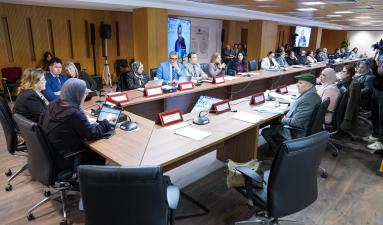
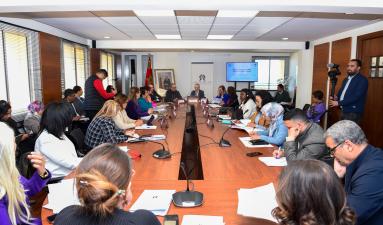
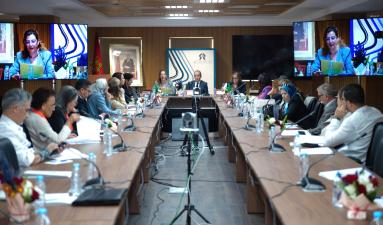
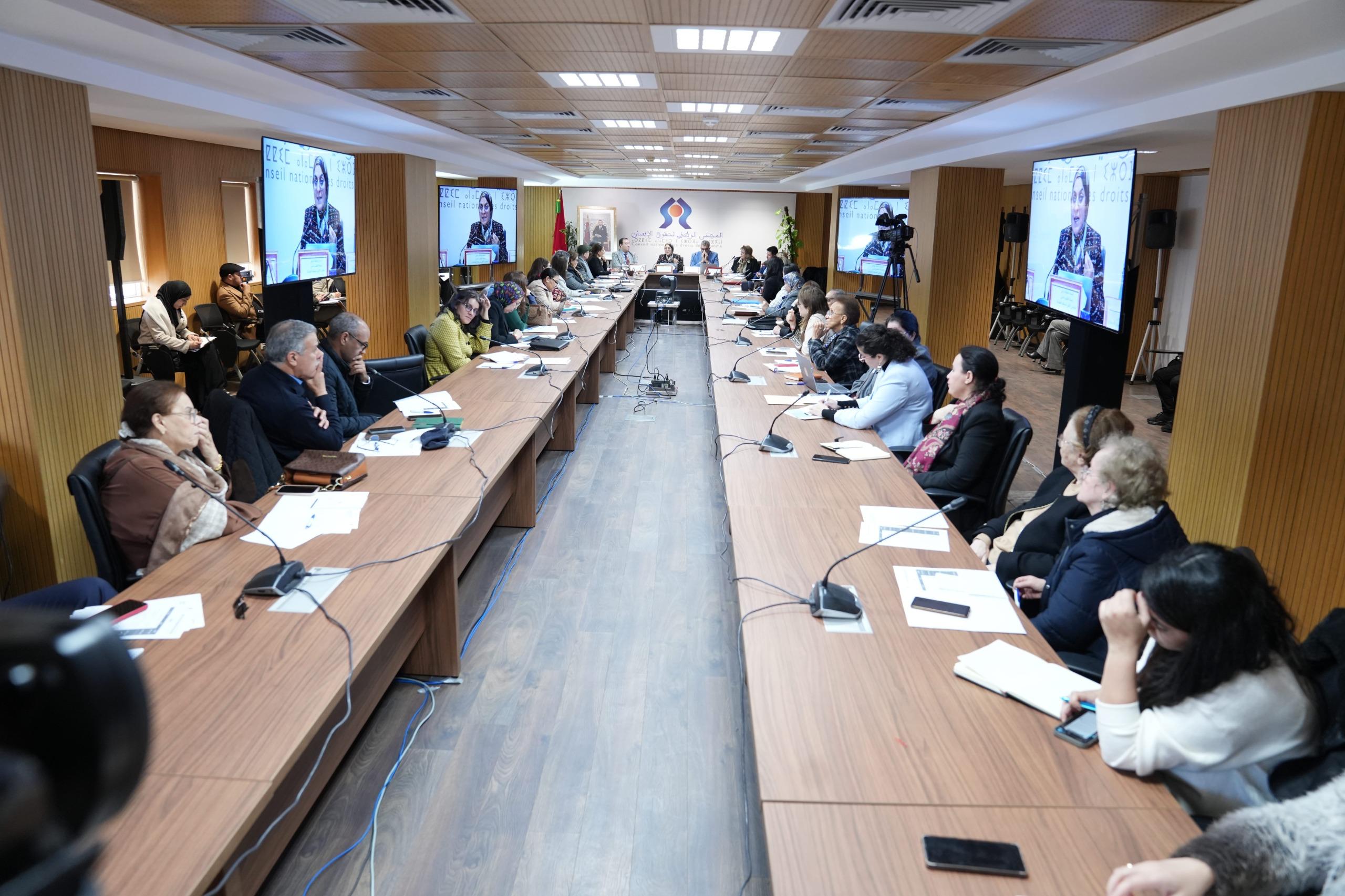
These remarks were made during a conference held on Wednesday, March 11, at the CNDH’s headquarters in the Moroccan capital Rabat as part of this initiative, under the theme “Equitable Justice: Pathways to Empowering Women and Girls to Access Justice.” The meeting marked the first in a series of discussions that will continue at the regional level throughout March.
In her opening remarks, Ms. Bouayach emphasized that the objective of this discussion, as well as the forthcoming regional ones, goes beyond examining legal frameworks alone. It also aims to address the challenges related to their practical implementation and to shed light on the barriers that continue to hinder women’s and girls’ access to justice. The goal is to help identify the conditions necessary to ensure effective justice by integrating legal, social, and territorial dimensions, thereby guaranteeing women and girls not only the right to report abuse but also the ability to pursue legal proceedings and obtain redress.
She explained that the choice of the theme reflects a new phase in the implementation of the Council’s strategy aimed at strengthening the effectiveness of rights.
It is worth noting that previous reports, campaigns, and field initiatives conducted by the CNDH have highlighted several key findings in this regard, including:
A rise in reported cases of violence against women and girls;
Disparities between courts, whether at the same or different levels, in the legal classification of similar acts of violence;
The need to encourage reporting;
Reluctance to report online violence, often due to fear of defamation and the perception that such cases do not receive adequate attention within the justice system;
Structural, social, economic, financial, institutional, and territorial challenges that continue to limit women’s and girls’ ability to claim and defend their rights and to effectively access justice.
Concluding the event, Ms. Bouayach stressed that facilitating women’s and girls’ access to justice “cannot be achieved through legal reforms alone.” It also requires the creation of both public and private environments that make women’s empowerment through justice an institutional and societal priority, supported by effective procedures and mechanisms. “A lack of trust in the judicial process remains one of the central obstacles to accessing justice.”


Read more