Five Major Principles, 40 Thematic Recommendations, and 10 General Recommendations
To Strengthen Morocco’s Experience in Press and Publishing Self-Regulation
The National Human Rights Council (CNDH) submitted its memorandum on Draft Law No. 026.25 on the reorganization of the National Press Council, in response to a request for its opinion from the Speaker of the House of Representatives on July 16, 2025.
The Council’s analysis was grounded in the Moroccan Constitution and in international conventions ratified by the Kingdom, particularly Article 19 of the International Covenant on Civil and Political Rights, which guarantees the right to freedom of opinion and expression. The memorandum also drew on comparative experiences from self-regulatory bodies in the press sector.
5 Major Principles and 40 Thematic Recommendations
After reviewing self-regulatory models in the journalism profession, the Council identified five fundamental principles that should guide the organization of such bodies, regardless of their specific structure, composition, or powers: freedom of expression, representativeness, pluralism, independence, and transparency.
Draft Law No. 026.25 was analyzed against these five principles, and the memorandum included detailed recommendations.
Recommendations on the Form of the Draft Law:
Including a preamble;
Restructuring the text;
Defining key concepts;
Discussing the draft law alongside reforms to other laws in the Press and Publication Code to ensure coherence.
Recommendations on the Content of the Draft Law:
Clarifying the legal status of the National Press Council to strengthen its authority and protect employee rights;
Ensuring institutional and functional independence by separating the management body from the ethics body;
Balancing the Council’s composition to fairly represent both publishers and journalists;
Increasing female representation;
Integrating digital platforms and new forms of media;
Establishing a mechanism for emergency intervention in cases of major infringements;
Strengthening protections for journalists’ constitutional rights, particularly regarding disciplinary measures, ensuring proportionality, necessity, and progressive application.
10 General Recommendations to Enhance the Effectiveness of Freedom of Expression
In addition to its recommendations on specific provisions of the draft law, the memorandum presents 10 general recommendations, highlighting the need for comprehensive reforms in the system governing the right to opinion and freedom of expression. These reforms aim to strengthen a rights-based media and journalistic environment and build on points raised in the Council’s previous opinions and memoranda. Key recommendations include:
Adopting a law regulating information flow;
Reducing legislative interference in journalism and promoting self-regulation;
Expanding freedom of expression from press to broader media;
Supporting the independence of media enterprises as a foundation for enhancing freedom of expression;
Combating hate speech through self-regulation in line with human rights standards;
Repealing criminal defamation laws and replacing them with civil provisions consistent with human rights norms;
Introducing a Charter for advertising ethics (...).
The National Human Rights Council (CNDH) submits its memorandum to the House of Representatives, relevant stakeholders, and the general public. It regrets that members of the House of Representatives were not given the opportunity to review it prior to or during the discussion and vote on Draft Law 026.25.
The CNDH believes that the House of Councillors still has the opportunity to consider its recommendations in the ongoing discussion of the draft law. It also reaffirms its commitment to carrying out its mandate within the powers conferred upon it and in accordance with the timelines established by Law No. 76.15 on its reorganization.
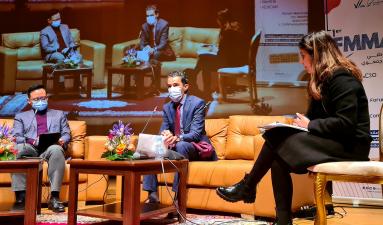
It is worth noting that the CNDH spent an entire month reviewing and analyzing all positions expressed on the draft law, in addition to engaging directly with the relevant stakeholders. Earlier this week, it held eight special listening and interactive sessions, along with a roundtable discussion, attended by independent professionals, journalists, and experts.
The Council invited all professional and trade union bodies in their organizational capacity, as well as the Temporary Committee for Managing the Affairs of the Press and Publishing Sector and the Ministry of Youth, Culture, and Communication. While the CNDH thanks these bodies for their participation, it emphasizes that they alone are responsible for appointing their representatives, whether for the listening sessions or the roundtable held at the Council’s headquarters.
Despite divergent views among participating bodies and varying stances on the draft law, the CNDH ensured that all parties could express their perspectives. This approach aligns with the Council’s role as a pluralistic, independent national institution and its mandate to defend, protect, and promote the full exercise of human rights and freedoms, in line with national and international standards.