
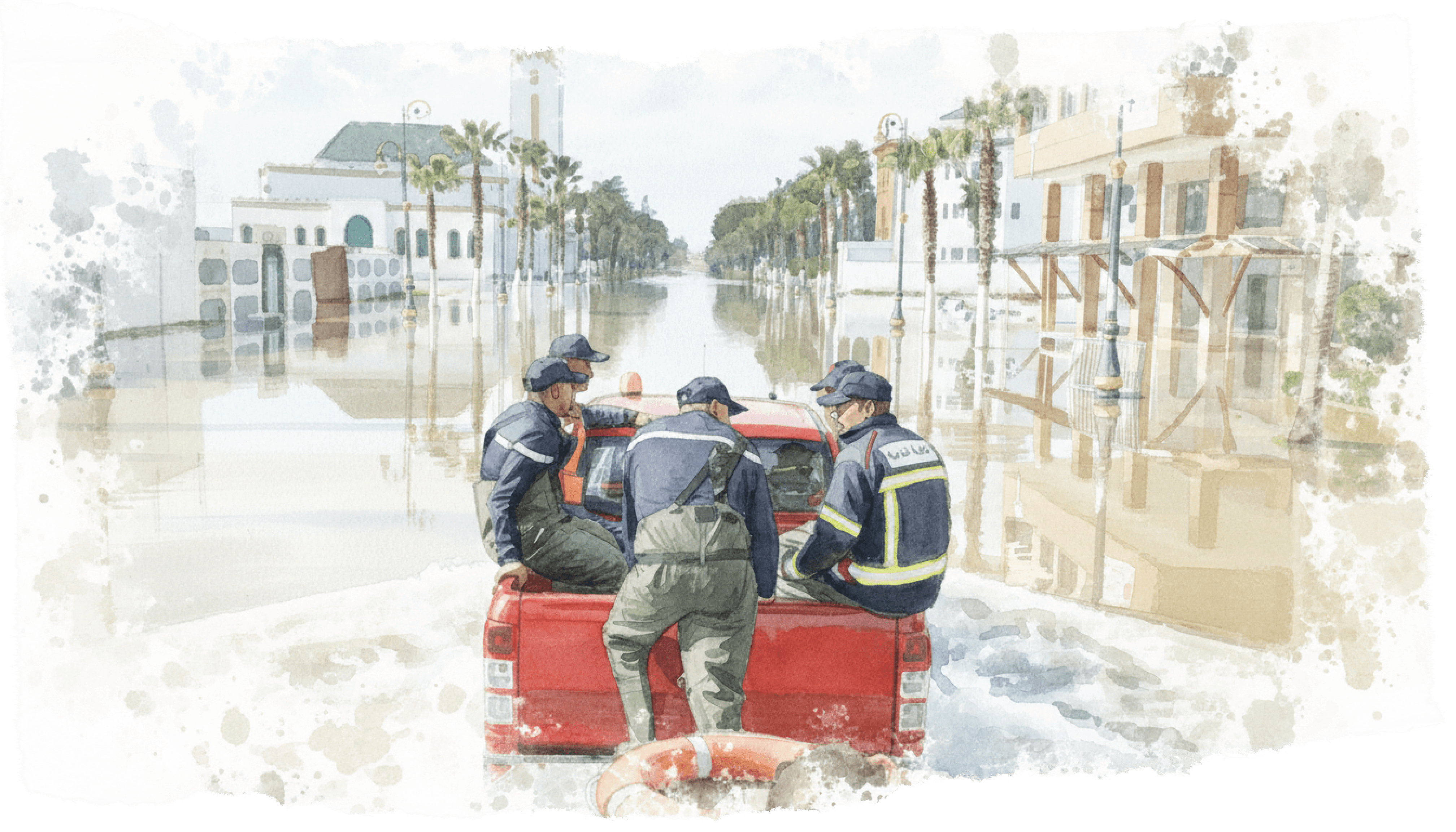
In its preliminary conclusions on the floods that affected several regions of Morocco between January and February 2026, the National Human Rights Council (CNDH) commended the swift and coordinated intervention of local authorities, who anticipated potential flood risks by mobilizing rescue resources and equipment and making them readily available to the affected population. The Council also praised the efforts of Morocco’s Royal Armed Forces, Royal Gendarmerie, National Security Forces, Civil Protection, Auxiliary Forces, and territorial authorities in evacuating over 180,000 people and securing property in the most affected areas.
"Thanks to the vigilance and proactive approach of the authorities and the cooperation of citizens in responding to evacuation instructions, we were able to avert an imminent humanitarian disaster in northwestern Morocco," stated the CNDH Chairperson in a statement during the presentation of the preliminary conclusions.
According to the CNDH’s preliminary conclusions, public authorities implemented a series of preventive and proactive measures to protect lives and ensure the continued enjoyment of fundamental rights, including housing, education, health, and food security.
The Council had assessed the preparedness to and management of the western region and Loukkos floods in light of international standards and the human rights-based approach to disaster response, particularly referencing the Sendai Framework for Disaster Risk Reduction (2015–2030).
The CNDH’s preliminary conclusions emphasized the importance of adopting proactive measures grounded in preparedness, establishing regional strategic reserves, and ensuring that evacuations are temporary and conducted in a manner that respects dignity, privacy, and community ties.
The assessment concluded that public authorities’ management of the floods demonstrated clear and tangible progress in applying international standards and a human rights-based approach, both in designing intervention operations and in leveraging the expertise and experience gained from previous disaster responses.
The Council also highlighted the positive response of citizens, their compliance with evacuation instructions, and their cooperation during transport to safe areas, all of which strengthened protection and response efforts. The CNDH concluded that this practice represents a best practice worthy of documentation.
In this context, the CNDH recognized the management of the western region and Loukkos floods as a model of best practices in natural disaster management, offering an opportunity to develop a national protocol for proactive intervention. This approach establishes a Moroccan model for proactive preparedness in managing crises and natural disasters.
To be continued…
Link to CNDH's Preliminary Conclusions (Available in Arabic)


