A report by UN Secretary-General António Guterres, to be presented during the 63rd session of the UN Human Rights Council in Geneva (September 7–October 9, 2026), highlights two initiatives by the National Human Rights Council (CNDH), chaired by Ms. Amina Bouayach, among the best practices and commendable initiatives implemented by national human rights institutions (NHRIs) worldwide.
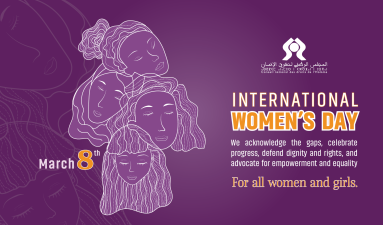
One of the featured initiatives is the national campaign launched by the CNDH in November 2025 to combat digital violence against women and girls.
At the heart of the campaign was a national caravan that traveled across Morocco for 16 days, making 36 stops in 12 cities across the country’s 12 regions. The caravan sought to raise awareness of technology-facilitated violence and encourage victims to report cases of digital violence.
The campaign also included three exhibitions in major public spaces in Rabat, along with a first-of-its-kind projection mapping dedicated to a human rights issue. Projected onto the main façade of the CNDH headquarters in Rabat, the display focused on women and girls who have experienced digital violence. The initiative was subsequently presented at several international forums as an innovative use of technology to raise awareness of human rights issues.
Artificial intelligence was also incorporated into the campaign to recreate victims’ testimonies through digitally generated characters, allowing their experiences to be presented while preserving their anonymity.
The second initiative highlights the CNDH’s work to support children in preparing their own alternative report for submission to the UN Committee on the Rights of the Child. This process gives children a direct platform to voice their views and assess the state of their rights from their own perspective, while enabling them to take a more active role in international human rights mechanisms.
Both initiatives are featured in a dedicated section of the Secretary-General’s report showcasing practices developed by NHRIs in different parts of the world.
The report states that 119 NHRIs were accredited worldwide as of June 2026. Of these, 91 held “A” status, indicating full compliance with the Paris Principles on independence, pluralism, legitimacy and effectiveness. The CNDH is among the institutions with “A” status. The remaining 28 institutions were classified as “B,” reflecting partial compliance with the Paris Principles.
More broadly, the report notes that NHRIs have moved beyond their traditional advisory role and now play a central part in addressing a wide range of human rights and fundamental freedoms. Their work includes monitoring places of detention and deprivation of liberty, preventing torture, observing elections and protecting vulnerable groups during electoral processes, as well as promoting the rights of women, migrants and persons with disabilities.
NHRIs also contribute to transitional justice and reparation for victims of human rights violations, promote corporate accountability in the field of business and human rights, and advocate for the right to a healthy environment.
According to the report, these functions are increasingly important in translating international human rights commitments into concrete policies, measures and practices at the national level.
The inclusion of the two CNDH initiatives reflects the Council’s contribution to addressing emerging human rights challenges, including technology-facilitated violence, while creating greater opportunities for children to participate in the human rights system.
The report was prepared pursuant to a Human Rights Council resolution requesting the UN Secretary-General to submit an annual report on the work of national human rights institutions.


Read more